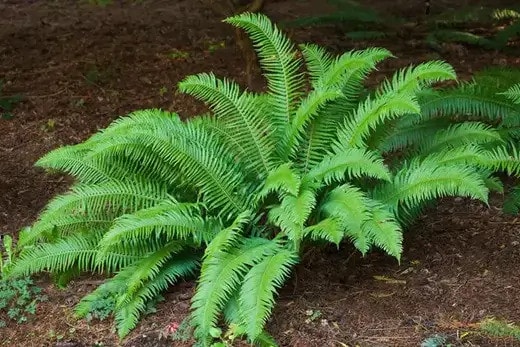
Not many plants add as much grace and simplicity to the shaded scenes like ferns plants that remain green throughout the year. Whereas most perennials dry up in winter, evergreen ferns for woodland gardens offer year-long texture, color, and form even in the coldest seasons. They are also vital in four-season landscapes, as these hardy varieties are able to grow in the low-light environments that other species cannot. In Tree Nursery Co., we also sell hardy outdoor ferns, which can withstand the shifting seasons and which can be used with good performance year-in and year-out.
Why Evergreen Ferns Are Essential for Winter Garden Color
Evergreen fern plants are critical to the winter garden color since they retain their fronds at a time when almost all the plants are in their dormancy. Whereas the deciduous plants go into hibernation by burying themselves underground, evergreen ferns retain their structure, giving the viewer something to look at, even when the colder weather occurs and leaves the shaded areas looking bare.
Ferns all year round have practical advantages as well as beauty. Their tenacious coverage helps to keep soil from eroding, cover overwintering species, and keep photosynthesizing on warmer days in winter. To know the species that are regionally specific, the USDA Plant Hardiness Zone Map assists in determining the ferns that will do well in your growing region.
Top Benefits of Planting Ferns That Stay Green Year-Round
Ferns for woodland gardens are beneficial in that they provide several advantages that cannot be replicated by the deciduous ones. They do not require the necessity of removing dead foliage during spring, because their fronds are also pretty during winter. This renders them to be amongst the most low-maintenance ferns.
Ferns all year round also enhance soil health in the year round. They have active root systems even when dormant and sustain soil organisms as well as preserve microbial diversity during winter. Older fronds contribute organic material to soil structure through natural decomposition, and this increases soil structure.
Best Fern Varieties for Four-Season Landscape Texture
Knowledge of how ferns grow assists in determining the most suitable type to be used during a year-round performance. Evergreen ferns generate new fronds during the spring that continue until the winter, being successively replaced by new ones the next season. The best sellers of Tree Nursery Co. are
Christmas Fern
This is a native evergreen fern having dark green leathery fronds, which are ever pretty despite the harshest winters. One of the best fern plants is the Christmas Fern, which grows in dry or moderately moist shade throughout the year, furnishing color all year round.
New York Fern
This is a lacy fern, which is a spreading fern, deciduous, and naturalizes well in woodlands. The New York Fern is one of the best low-maintenance ferns to use in establishing dense groundcover that does not need fertilizing.
Bracken Fern
This is a hardy deciduous fern that has triangular fronds and withstands both sun and shade. Bracken Fern is one of the most versatile fern-type plants suitable for problematic areas that have poor soil.
Giant Ostrich Fern
This is a dramatic, deciduous fern and grows in clumps of tall vases of vivid green fronds about 4 to 5 feet. Giant Ostrich Fern is one of the most noticeable ferns for woodland gardens, forming accentual points in the damp, dark places.
Fiddlehead Fern
This is an edible fern that is famous due to having tightly coiled spring shoots and graceful arching fronds during summer. The Fiddlehead Fern is an excellent selection amongst the fern-type plants that a house owner would admire but also consume as food.
Step-by-Step Guide to Planting Evergreen Ferns
When fern plants are properly planted, they are well established and can be depended upon. Learning about how ferns grow assists in providing them with the best environment. Follow these steps:
- Select the appropriate site: A large number of ferns for woodland gardens like partial to full shade, and avoid excessive heat in the afternoon.
- Ready the soil: Till planting sites and add compost and organic matter to the site to enhance retention of moisture.
- Determine the right depth: Place ferns so that the crown is at or slightly above the ground level to avoid rot.
Post-Planting Care
Newly planted, low-maintenance ferns are deeply rooted in water one or two times a week during the initial growing season. This can be done by applying two to three inches of shredded leaf mulch over the base to replicate a natural forest floor circumstance. Tree Nursery Co. has comprehensive care directions on each order.
Creative Ways to Use Evergreen Ferns in Landscaping
Ferns all year round provide multi-purpose landscape use, other than the conventional woodland gardens. Plant them as perennial ground coverage under deciduous trees where grass is struggling, or plant them en masse along shaded paths in order to generate luxurious borders that do not fade away in the winter.
Low-maintenance ferns are also ideal in container gardens that feature shaded porches, and the ferns create an exquisite texture, which matches the flowering shade perennials. Arrange the fern-type plants in layers by height, with the tall ones, such as Giant Ostrich Fern, being background plants; the medium ones, such as Christmas Fern, being in the middle; and the spreading ones, such as New York Fern, being groundcover.
Conclusion
The evergreen ferns also offer certain beauty, texture, and form to shaded landscapes when the rest of the plants are dead. They need little servicing after being established and keep on enriching the soil health with each season. Green Christmas Fern, naturalizing New York Fern, versatile Bracken Fern, dramatic Giant Ostrich Fern, and edible Fiddlehead Fern, all varieties of Tree Nursery Co., are field-grown and are ready to grow. Trust Tree Nursery Co. offers quality ferns to our customers at a reasonable price to suit their landscapes with fern plants and ferns for woodland gardens.
FAQs
What ferns stay green all year?
The most dependable evergreen Fern plant is the Christmas Fern, which continues to bear dark green fronds during the most extreme winters.
Are evergreen ferns cold-hardy?
Yes, evergreens to use in woodland gardens, such as Christmas Fern, are cold-hardy to zone 3 and can even freeze.
Do ferns lose their leaves in winter?
Plants that are of the deciduous type of ferns, such as the New York Fern, die back, and those that are evergreen, such as the Christmas Fern, remain green throughout the year.
Do ferns need fertilizer?
No, the majority of low-maintenance ferns do not need fertilizing, because they are found in lean woodland soils to which leaf litter has been added.
Can ferns be used as groundcover?
Yes, varieties such as the New York Fern are excellent year-round groundcover ferns in shaded areas where grass cannot grow.
When is the best time to plant ferns?
Planting fern plants should be done in early spring and fall when the roots have time to grow before the extremes of the temperatures come.
Where can I buy hardy evergreen ferns online?
Tree Nursery Co. provides high-quality, field-grown ferns in woodland gardens, and they provide expert advice and tips with their purchases.