How to Grow Moss Naturally in Your Garden
Posted by Tammy Sons on Feb 12th 2026
Developing green and fertile sceneries does not necessarily need classic grass or flowering fields. Growing moss is one of the simplest, prettiest ways of bringing the shady, dull spaces into green carpets of natural beauty. Planting moss enables homeowners to create ground cover with minimal effort by creating serene garden areas, and where other lawns fail, the moss continues to grow. Moss grows naturally in the conditions most plants cannot withstand, unlike grass, which requires mowing constantly, fertilizing, and watering. Tree Nursery Co. offers the highest quality live moss species, as they give gardeners healthy plants that grow fast and make beautiful and sustainable gardens.
Understanding How Moss Grows in Nature
For your best experience of gardening, the most effective way of growing moss is by first learning its biological peculiarities. In contrast to the usual plants, moss has no roots, stems, or vascular structures. Rather, it takes in water and nutrients by direct absorption through its leaves and is thus ideally suited to cold and wet conditions, where it is frequently found as a shade plant.
Moss is a reproduction organism that spreads naturally across surfaces, as the reproduction process is not seed-based. It fixes itself with the help of structures known as rhizoids—small hair-like filaments that attach to surfaces without penetrating into them deeply, as is the case with conventional roots. This enables the moss to grow on rocks, bark, soil, and concrete.
To understand how to grow moss, it is important to note that these primitive plants grow well under acidic conditions that have a pH of 5.0-6.0. They like constantly wet conditions with diffused light, and so they suit north-facing garden beds, under treetops, and beside water bodies where grass usually does not thrive.
The tree nursery Co. also nurtures mosses that are suitable for different types of gardens, and customers will be provided with a species that fits the exact landscape requirements. The biology of moss aids gardeners in developing the best growing conditions that would enable long-term establishment.
Choosing the Right Location to Grow Moss Naturally
Selecting the Perfect Site for Planting Moss in Nature.
The only thing that can make moss successful on planting is the choice of the locations where the natural conditions are favorable to moss and not other plants:
Ideal Growing Conditions:
- Shade demands: Partial or full shade with filtered sunlight or dappled light effects.
- Moisture levels: The soil or surfaces that are always wet without standing or full saturation.
- Soil acidity: Neutral to acidic at PH 5.0-6.0, but this depends on the variety.
- Reduction of competition: Areas of weak grass that do not need aggressive management of weeds.
- Surface: Soil, rocks, logs, bricks, concrete, or tree bark, depending on the type of moss.
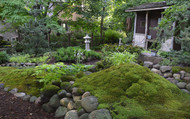
Moss for the garden is also very effective in the woodland environment, the Japanese-style landscape garden, the rock garden, between stepping stones, and in streams or pond areas. These are the natural places where humidity, shade, and acidic conditions required by moss are found.
Do not plant where it is exposed to full sun, has a high alkali soil level, or has a high level of aggressive foot traffic, which crushes the fragile moss structures. The USDA Plant Database states that native moss species have good ecosystem services, such as erosion control and moisture retention.
The Cushion Moss of Tree Nursery Co. inhabits the shaded garden beds and rock gardens and forms the soft and pillowy mounds of bright green, which provide textural interest to the landscapes throughout the year.
Step-by-Step Guide to Starting a Moss Garden
To be able to plant moss successfully, it is necessary to prepare the sites and lay out the establishment methods that encourage quick colonization:
- Prepare Your Planting Area. Weed and clear other competing vegetation such as grass, weeds, and debris. Lightly rake the surface of the soil, but not in a manner that greatly disturbs it. Measure pH in test soil, and add sulfur, if required, to reach the desired level of acidity (5.0-6.0).
- Select Your Moss Variety. Select a species that suits your needs. The Lawn Moss is perfectly suited for the substitution of the traditional grass in shadier lawns, whereas the Tree Moss suits well on tree bark and in more natural woodland environments.
- Position Moss on Surface: Press Moss on a prepared surface and press firmly on the surface to ensure full contact of the moss and the substrate. In soil use, the moss can be torn to bits and sprinkled over the surface, and each piece beaten deep into the earth.
- Tamp down moss or place landscape pins so that moss is not blown away. Spray all over with a misting option to prevent the removal of moss pieces. Moss care establishment: Moss should always be kept moist.
- Retain Moisture. During Establishment Water daily or several times daily the first 2-3 weeks in dry seasons. The successful growth of moss is achieved on the basis of avoiding the process of desiccation at this sensitive stage of establishment, when rhizoids are formed on the surface.
The Reindeer Moss of Tree Nursery Co. provides distinctive texture and color breaks, forming beautiful accents for terrariums, fairy gardens, or ornamental landscape items where insufficient moss of a more conventional variety may not grow.
Best Garden Uses for Naturally Grown Moss
- Moss for the garden: Moss offers the landscape a wide range of design possibilities that can augment its landscape in various innovative ways:
- The Lawn Replacement Moss in the lawn usually points to the environments where grasses are not doing well. Instead of struggling with nature, accept moss as a lovely, easy-going substitute that needs no mowing, no fertilizer, and no extensive watering after the seedlings have taken shape.
- Pathway Borders. Plant between stepping stones and edges of walkways, creating a soft transition, unifying hardscape features. The army softens the texture and encourages the exploration of bare feet without splashing mud during the rain.
- Rock Garden. Establish moss on and surrounding rocks, boulders, and features on stone. This gives worn-out, naturalistic effects that transform fresh installations to appear decades old.
- Water Feature Surrounds. Frame ponds, water streams, and fountains with moss plantings, which are planted in high-humidity areas. The vibrant green establishes horizontal effects between the water and the nearby scenery.
- Container Gardens. Utilize moss as a living mulch in container planting or build specific moss terrariums with different types of moss. In order to know how to grow moss in containers, it gives us a sense of green throughout the year, even in small areas.
Cushion Moss by Tree Nursery Co. provides dimensional texture in rock gardens and containers, developing interesting mounded patterns of growth that are interesting to the eye as opposed to planar groundcover.
Common Mistakes to Avoid When Growing Moss
Knowledge of common mistakes contributes to the successful planting of moss projects that grow fast and survive in the long term:
- Planting under Inappropriate Conditions: The most frequent failure that is caused by gardeners is growing moss in full sun or dry areas. Moss is also in need of shade and regular moisture; if it is forced into unfavorable conditions, it will fail no matter how well it is taken care of.
- Over-Fertilizing: Moss absorbs the nutrients directly through the leaves, therefore being highly sensitive to the fertilizers. Moss is burnt in chemical applications, and the rival weeds are promoted. Moss gardens should be free of fertilizers.
- Excessive Foot Traffic: While the setup moss can withstand the occasional light traffic, the constant walking tramples the fragile structures. Put stepping stones over moss lawns to keep traffic off and maintain the health of the moss.
- Poor Establishment: Watering new moss needs thorough dampness upkeep. Their ability to allow drying of moss in the initial weeks avoids rhizoid adherence, which results in establishment failure even when all other conditions are favorable.
- Lack of Attention: Competition from weeds and grass soon tends to overgrow new moss plantings without treatment. When establishing, eliminate competing vegetation at the earliest stage, and space will be created so that the moss is able to colonize successfully.
- Wrong Species: Not every moss species is suitable everywhere. Lawn Moss grows on the surface of soil, whereas Tree Moss prefers the surface of bark and wood. Target species are matched with a site, which is assured of success.
The Tree Nursery Co. offers professional advice on the species choice and moss management methods, which allows the client to escape the most frequent traps as well as create a successful moss garden that needs minimal effort after it grows.
The addition of organic matter as a support of microbial diversity forms a good substrate, which is useful to support moss establishment without damaging fertilizers.
Conclusion
Naturally growing moss would provide natural, beautiful, sustainable garden areas that need little maintenance and help to maintain local ecosystems. Be it the replacement of struggling lawns with moss growing in the lawn, serene Japanese-style gardens, or even the addition of texture to rock features, moss is by far the most versatile and convenient. The high-quality varieties of Tree Nursery Co., such as Cushion Moss, Lawn Moss, Tree Moss, and Reindeer Moss, offer healthy varieties of mosses that grow fast and last several years. Today, spend an hour shopping in our assortment and learn how to grow moss and turn dark areas into green oases.
FAQs
How do you grow moss naturally at home?
Select shaded, alkaline spots that have uniform moisture, then press the bark of moss heavily against the surfaces and water it frequently during its growth.
What conditions does moss need to grow?
Moss needs to be in the shade, have constant moisture, have acidic soil (pH 5.0-6.0), and have unaggressive competing plants.
Can moss grow on regular soil?
Yes, moss does well in a compacted and slightly acidic soil in the shady regions with ample water and little competition.
Does moss need sunlight to grow?
Moss thrives in the shade, and bright sunlight normally dries up and kills most moss species.
What is the best moss for landscaping?
Cushion Moss and Lawn Moss are very good options, as they have good looks and are also stable when planted in gardens.
Where can I buy live moss for my garden?
Tree Nursery Co. is the producer of high-quality live moss species that are delivered with professional care guidance and planting advice.