How to Plant Tree Seedlings for Strong and Healthy Growth?
Posted by Tammy Sons on Mar 19th 2026
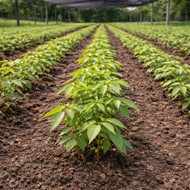
When tree seedlings are planted in the right manner, root growth and growth in decades to come will be healthy. One of the cheapest and most efficient methods of building forests, shade trees, and landscapes with a natural appearance is through tree seedlings. The right way of planting enables young trees to develop good root systems and adapt very easily to their surroundings. The main steps involve the selection of suitable sites, excavation of an adequate hole size, and proper watering.
Planting tree seedlings also requires that care be taken to ensure that roots are straight and evenly distributed in the soil. At Tree Nursery Co., we are offering tree seedlings for sale that can be used in landscaping, restoration works, and long-term development.
Why Are Tree Seedlings a Smart Choice for Landscaping and Reforestation?
The tree seedlings provide intelligent options in terms of landscape placements and reforestation since they are much cheaper than container-grown or balled-and-burlapped tree plants. Young seedlings are more tolerant of transplant shock, and they establish faster than bigger ones. Their smaller root systems are not largely uprooted when they are being planted; hence, they recover faster and continue growing.
Genetically adapted local climate, soils, and pest pressures make native tree seedlings especially good, as they are adapted to those conditions. They sustain local fauna that developed with these species. Bare-root seedlings are easy to move without the soil, as they are transported at a relatively low cost and still have a high viability.
Over the decades, Tree Nursery Co. has provided tree seedlings for reforestation, stream buffers, and residential landscapes. It has been witnessed that well-planted seedlings can sometimes grow into bigger nursery stock in 3-5 years.
Choosing the Best Location Before Planting Seedlings
Proper selection of sites prior to planting tree seedlings has a long-term survival and growth rate. The process of knowing how to grow tree seedlings begins with matching appropriate species to the environment of the site, sun exposure, soil moisture, drainage, and eventual size at maturity. Shade-tolerant species planted in full sun or trees that are in shade would ensure that they perform poorly.
The fundamental considerations of the site would include:
- Sun exposure: Correlation of sun availability with specific light needs.
- Soil drainage: It is important to ensure that there is sufficient drainage of the soil to allow the growth of species that do not tolerate wet roots.
- Mature size: Providing room to mature in terms of height and canopy size.
- Utilities in the ground: Avoiding places that may cause the infrastructure to be damaged by roots.
Take into consideration the future when choosing tree seedlings for sale. The trees, which are planted around buildings, are seen to provide shade to the buildings and ultimately fall into the gutters. The native tree seedlings tend to perform well compared to exotic species due to their adaptation to the local conditions.
Step-by-Step Guide to Planting Tree Seedlings Properly
To plant tree seedlings correctly, it is important to pay attention to the issue of roots and contact with the soil. The bare-root seedlings especially require the right method since bare roots dry easily when they are exposed.
Using these steps will work:
- Planting holes: Open planting holes by means of digging as deep as the root collar is placed at ground level in the case of tree seedlings. Holes must be made big enough to allow roots to stretch out naturally. Small holes push roots to unnatural positions, and these positions continue to exist over the years.
- Treat roots carefully: Keep bare-root seedlings damp till the time of planting. Cut off any damaged or enveloping roots with sharp and clean instruments. Bury the root spread in holes so that they lie naturally out and down.
- Proper backfill: Most native tree seedlings do not require an amendment to use native soil. Amendments cause texture discontinuities whose roots are reluctant to cross. Beat the soil until it is firm, and backfill in order to remove air pockets. Water well to loosen soil around roots.
- Mulch correctly: Put wood chip mulch or wood chip compost around the seedlings of trees, but keep it away from the stems. Mulch keeps the soil moist, balances soil temperatures, and stymies competing vegetation.
- Water with consistency: Tree seedlings need 5-10 gallons of water per week in the first growing season. Monitor rainfall and soil type. Observe the growth of rival vegetation—grass and weeds are aggressive with young seedlings.
Best Tree Seedlings for Long-Term Growth and Landscape Value
The tree nursery company provides tree seedlings that have been tested in the area:
American Beech Seedlings
This is a native tree (Fagus grandifolia) that grows with smooth gray bark and bronze fall foliage. The American Beech Seedlings grow out to become magnificent shade trees that are 50-70 feet tall. It is one of the best native tree seedlings to invest in for the long-term landscape view.
Sycamore Seedlings
These are fast-growing native trees (Platanus occidentalis) that have a unique white exfoliating bark. The Sycamore Seedlings can be planted in wet soils, but they are also able to withstand periodic floods. It is one of the rapidly growing tree seedlings to use in establishing shade.
Tulip Poplar Seedlings
A high-energy native (Liriodendron tulipifera) that bears tulip-shaped flowers and grows fast. Tulip Poplar Seedlings, when well planted, grow 2-3 feet in a year. High-quality tree seedlings for sale to grow a fast canopy.
Sourwood Tree Seedlings
This is a native understory tree (Oxydendrum arboreum) that has white clusters of flowers and red fallen leaves. The Sourwood Tree Seedlings showcase superior native tree seedlings for smaller landscape and woodland gardens.
Virginia Pine Seedlings
A native evergreen (Pinus virginiana) offers all-year-round screening and wildlife habitats. The Virginia Pine Seedlings grow fast in low-quality soils. It is a good-quality bare-root seedling to control erosion and to reforest.
Conclusion
The idea of planting tree seedlings in a correct manner is an important factor in raising healthy trees that will span generations. Tree seedlings that are sold to be successful involve knowledge on how to grow tree seedlings by selecting the right site, as well as the technique. The years of experience at Tree Nursery Co. guarantee quality native tree seedlings and bare-root seedlings that have proven themselves over the years under different environments. You can depend on Tree Nursery Co. to provide tree seedlings that grow well and produce beautiful mature trees, whether you go with American Beech Seedlings, Sycamore Seedlings, Tulip Poplar Seedlings, Sourwood Tree Seedlings, or Virginia Pine Seedlings.
FAQs
When is the best time to plant tree seedlings?
The seedlings of plants should be planted during dormancy (late fall/early spring) to establish them optimally, as the roots get time to grow before the bare-root seedlings begin to leaf out.
How deep should tree seedlings be planted?
Plant the tree seedlings at ground level with the root collar and not too deep.
How often should newly planted seedlings be watered?
Water the seedlings weekly with 5-10 gallons in the initial season, which is the most crucial for establishing the varieties of the tree seedlings to be sold.
What soil is best for planting tree seedlings?
Native tree seedlings are also capable of growing in native soil without fertilizers, but compost enhances the growth of tree seedlings in poor soils.
How long does it take to grow a tree from a seedling?
Tree seedlings grow into huge trees in a period of 10-15 years, and the maturation period is 20-40 years, depending on the growth rate of the species.
Where can I buy healthy tree seedlings online?
Tree Nursery Co. is a company that sells high-quality tree seedlings that include bare-root tree seedlings, native tree seedlings, and other varieties of tree seedlings with professional guidance.
Can you grow a tree from a seedling?
Yes, tree plants can be grown to their full size when they are planted and taken care of, and it is a success.