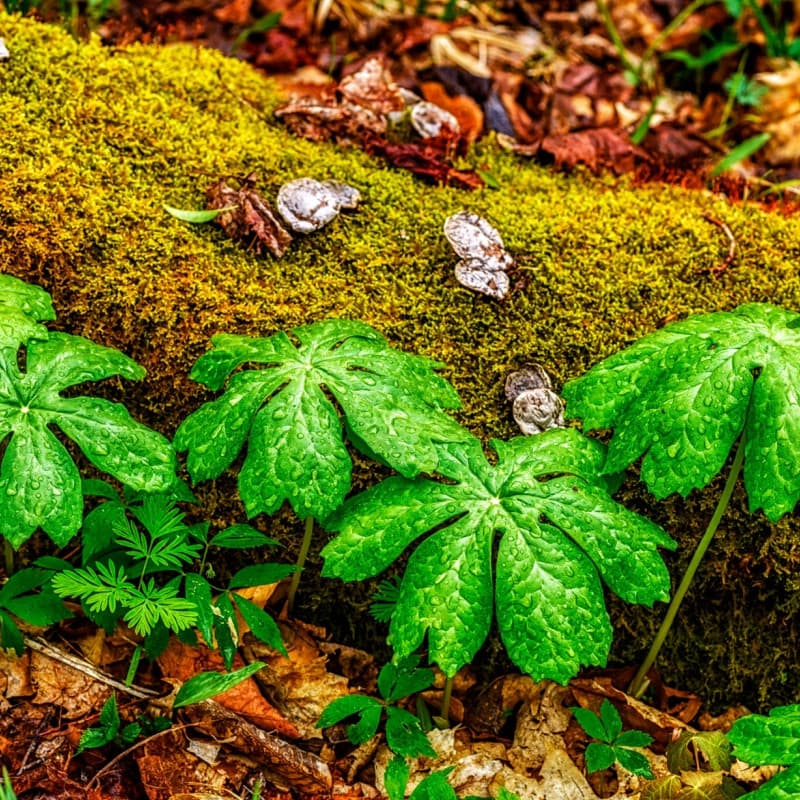
Mayapple
$5.99
Product Details
Mayapple Features
Mayapple produces large palmate leaves on sturdy stems making it bold and unassuming all at once. Grows low to ground, sending up tough stems clad with large leaves that look like they are towering above the forest floor from where they originate. Increase in size over time sending runners to create colonies of plants that appear airy and well suited to their environment, instead of overcrowded. Large leaves provide large doses of interest to shady areas while maintaining a mellow demeanor.
Growing Conditions For Mayapple
Light/Water: Appreciates morning sun or dappled sunlight all day long. Plant in soil that retains moisture but will drain well. Performs best with plenty of water during the growing season. They like a gentle breeze to help it feel airy and natural.
gardens When happy and thriving in its environment, matures at a predictable rate and appears each spring with confidence.
Where to plant Mayapple
MayapplePlant them in wooded gardens or shady borders for its ability to hold its own against other shrubs and trees. Its large leaves work well underneath trees and fill in open shaded spaces. Looks great when planted en masse. Pair with other native woodland flowers and perennials such as ferns, trilliums, wild ginger, hostas, and other shady perennials for contrast in leaf shape and size. As it spreads it can fill in spaces quite nicely, creating lush and tranquil shaded gardens that require little maintenance.
Why We Love Mayapple
Fruit PlantBloom time doesn’t factor into their long-lasting appeal. Because it expands each year to fill in more space, it looks great early in the season and provides texture to shady parts of the garden. Reliable; once established, returns each year with vigor. Plant once and watch your woodland garden grow overtime into a well-designed space.
Podophyllum peltatum, commonly called Mayapple or American Mandrake, boasts handsome palmate leaves and pretty bloom spikes for cutting in spring. Native Americans used podophyllin sap from the rhizomes as a medicine to treat skin ailments and intestinal worms, but be warned, it is poisonous if ingested.
Related Products