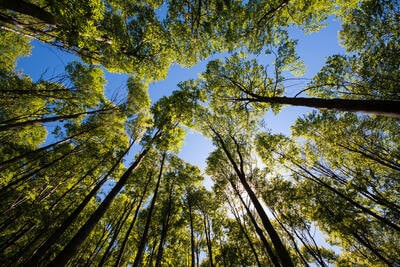
It does not need fencing and artificial barriers that are very costly to create a personal, non-aggressive outdoor sacred zone. Evergreen trees can be considered a natural and living solution that will beautify your landscape screening and provide you with year-long beauty. As opposed to the traditional fences, which grow old and deteriorate, the fast-growing evergreen trees make a dense and green cover, which increases in value and in terms of visual beauty with every season.
In Tree Nursery Co., we deal with hardy and dependable trees that are ideal for converting your garden into a spiritual world away, which makes your garden your own kind of getaway.
Why Are Evergreen Trees the Smartest Choice for Year-Round Privacy?
The evergreen trees keep their green foliage all through the year, thus guaranteeing you privacy when you need it the most. Whereas in winter the trees would shed their leaves and expose your property to the neighbours and the street traffic, the tree that stay green all year create a continuous natural screen 365 days a year.
The benefits of these living barriers are much more than mere privacy. They actively absorb noise on busy streets, purify airborne pollutants, are vital as a habitat to wildlife, and even assist in the balance of temperature around your place of residence. Fast-growing evergreen trees, such as some pines, spruces, and cedars, can be very fast-growing and will grow to large heights in a few years, creating your personal outdoor retreat.
According to Tree Nursery Co., you should consult the USDA Plant Hardiness Zone Map in order to know what types of trees grow best in your local area. This is sure to bring your investment long-term success and healthy growth. The choice of species to be used in specific climates, soil types, and growing conditions is meticulously determined by our specialized group; hence, it is easier to find the ideal species to suit your particular landscape situation.
Top Benefits of Using Trees Instead of Fences for Privacy
After selecting evergreen privacy trees instead of the conventional wood or vinyl fencing, smart homeowners will gain several strong benefits:
- Cost-effectiveness in the long run: Trees can be valued, and fences can be devalued and need to be replaced.
- Down to minimum maintenance: No yearly painting, staining, or rotten board replacement and broken panel replacement.
- Important impact on the environment: Trees not only enhance the quality of air, but they also trap carbon and contribute to the oxygen production of local ecosystems.
- Excellent aesthetic values: Organic shapes and natural beauty, which increase curb appeal and the desirability of the property.
- Flexibility in design: When strategic placement is used, privacy is created precisely where it is required without a bleak boundary line.
In comparison to the use of rigid fence installations, which provide hard visual protection, the types of evergreen plants may be intelligibly laid out in staggered rows to provide complete coverage and the look they appear to have. This stratification makes it more visual, fuller, and more effective in terms of screening, and it does not look institutional.
The customers of Tree Nursery Co. will often use evergreen screens with more colorful accents of flowers, such as our Forest Pansy Redbud Trees, to provide seasonal color, blooms in the spring, and overall dynamic interest, along with privacy throughout the year.
Step-by-Step Guide to Choosing the Best Privacy Trees
To choose the best evergreen trees for privacy, one should pay special attention to the following important aspects, which will define successful results in the long term:
- Evaluate Your Space: Determine the size of the space available and record the everyday patterns of sun exposure. Evergreen privacy trees require proper spacing, which is usually 6-12 feet in between, based on the size of the canopy when mature, to create a healthy root system as well as branching.
- Calculate Height Requirements. Determine the height of your privacy screen. It depends on how tall the privacy screen must be. There are smaller ones that grow to 20-30 feet, but larger trees can also be 40-60 feet tall and block the second-story view.
- Assess Growth Rate Expectations. When immediate screening is necessary in your case, then focus on evergreens that grow very quickly to develop high coverage as compared to slower-growing ones that only reach maturity after decades.
- Match Your Climate Conditions. Find species that are just right for your local weather and USDA hardiness zone. Check the USDA Plant Database to find out more about growing information, native ranges, and cultivation needs.
- Take into account ongoing maintenance requirements. There are also those varieties of evergreen plants that should be regularly trimmed and shaped and those that are more attractive with a natural form, with minimum intervention. Choose mulch maintenance depending on your time and level of gardening skills.
Through the tree nursery Co., complementary species such as the Catalpa Tree are available to add variety of texture and height to the planting of mixed-species privacy, which retains interest all year round.
Best Tree Varieties That Create Natural Privacy Screens
Although the tradeoff is that arborvitae and Leyland cypress are classic evergreen trees and are the dominant privacy plantings, the various species used will make the landscape more resilient and aesthetically pleasing, with better resistance to pests.
Catalpa Tree
The Catalpa Tree is not a standard evergreen but is a fast-growing tree that can provide wide leaves forming dense privacy screens in summer. It is a beautiful white flower that attracts pollinators in spring.
Forest Pansy Redbud Trees
Forest Pansy Redbud Trees are decorative beauties that can be paired up with evergreen plants to offer layers of pleasant color (purple) and season-long appeal (pink flowers in the spring).
Hall’s Hardy Tree
Hall’s Hardy tree is a productive addition to privacy plantings, with gorgeous early spring flowers and edible nuts, as well as with an attractive branching structure that fills gaps in mixed plantings.
Elderberry Tree
Elderberry trees grow faster than others and are ideal to plant on the lower levels to screen the yard and also provide an edible berry with white flower masses that bees like.
Quaking Aspen Tree
Providing dynamic, rustling privacy screens made with unique white bark and stunning golden autumn shade, the Quaking Aspen Tree is best suited to naturalized landscapes and bigger properties.
Caring for Evergreen Privacy Trees for Long-Term Success
Proper maintenance ensures your trees that stay green all year remain healthy, beautiful, and efficient in giving you your privacy over decades:
- Watering: Newly planted trees require regular moisture in their very critical establishment stage, which is the first two growing seasons. Deep watering promotes the establishment of robust root systems as well as drought resistance. Evergreen trees that are mature do not need to be irrigated as frequently unless during the long dry seasons.
- Mulching Benefits: Scatter 2-4 inches of organic mulch over the tree base, but not in direct contact with the tree trunk. This retains soil moisture, decays competitive weeds, regulates soil temperature, and slowly incorporates organic matter, which decomposes.
- Growing Schedule: Annual spring Coloring with balanced slow-release manure will contribute to strong growth, high green color, and resistance to diseases. It is also crucial in the case of evergreen trees, which grow fast and require more nutrients.
- Pruning Techniques: Light shaping does not reduce the density, regulate its height, or enhance the air movement in the canopy. Eliminate dead, damaged, or crossing branches as soon as possible to avoid points of disease entry and structural integrity.
A combination of traditional conifers with the best evergreen trees for privacy, with the specialty varieties of the Tree Nursery Co., produces diverse and multi-season screens that provide an all-year-round beauty and ecological and dependable coverage.
Conclusion
Evergreen trees and free privacy vegetation offer breathtaking, useful solutions to the statistic that improves radically with age, instead of compromising as do artificial substitutes. Regardless of whether you use traditional conifers or get creative and incorporate flower-producing forms of the same, like Forest Pansy Redbud, Catalpa, Hall's Hardy Almond, Elderberry, Elderberry Tree, or Quaking Aspen, you are guaranteed a living privacy fence that adds value to your property, serves as a home to local fauna, and also provides better living.
Tree Nursery Co. is a company that provides quality privacy trees supported by knowledge of growing, high attention to practices, and outstanding customer service. Today, create your own outdoor oasis with our wide range of products.
FAQs
What is the fastest-growing evergreen tree for privacy?
The Leyland Cypress and the Green Giant Arborvitae also grow at a rate of 3-5 feet yearly, making the two an effective privacy screen in a few years.
Which tree stays green all year round?
The real evergreens, such as pine, spruce, fir, cedar, and arborvitae, have foliage all year round.
How tall do privacy trees grow?
The majority of privacy trees grow to 20-60 feet at maturity, although they may grow much higher when not pruned.
Do evergreen trees need pruning?
The majority of them do not need excessive pruning except as a way of getting rid of dead branches or managing height and general shape.
How to trim evergreen trees?
Lightly prune in late winter or early spring, and no more than a third of new growth each year, so as to keep them healthy.
When to cut evergreen trees?
This is best done late in the winter, when plants are not yet in the spring and when it is not too cold or too hot to provide the plants with extreme stress.
Where can I buy privacy trees online?
Tree Nursery Co. is a company that provides privacy trees that are delivered to your doorstep with professional planting instructions and care guidelines.