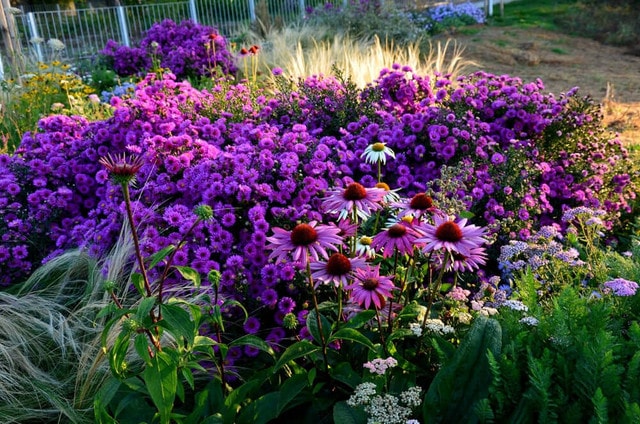
Long-blooming perennials provide more value to Tennessee gardens than anything. These planted groundwork plants carry seasonal color out of spring into fall, reliably attract pollinators, and with seasonal and dependable blooms year-in and year-out occupy landscape beds. Perennial plants reappear with greater strength and even greater wonder every season, unlike annuals, which have to be replanted after every season. In Tree Nursery Co., we are dealing with hardy perennials and flowering vines that are well-adapted to the climate and soil types of Tennessee.
Why Are Long-Blooming Perennials Garden Game Changers?
The fact that long-blooming perennials provide months of color with much less effort than conventional flower beds is a game-changer. Once planted, these plants are reliable to come back with each spring without having to replant them; with each season they go through, they expand enough to occupy more space and yield more flowers.
Perennial plants are also known to enhance the health of the soil in the long run. Their year-round active root systems enhance soil organisms, enhance microbial diversity, and naturally increase the organic matter. To determine what species are best suited to a particular region, the American Horticultural Society can be used to determine which perennials will thrive in the growing zones in Tennessee.
Benefits of Perennials That Bloom All Season
Perennials that bloom all summer long are the fine ones to have. These nonstop flowering perennials maintain gardens in late spring and through early fall with a few months of aesthetic appeal and pollinator value at minimum deadhead intervention.
The presence of long-lasting blooming perennials also draws bees, butterflies, and hummingbirds throughout the growth period, providing dynamic landscapes that sustain natural local ecosystems. They have long flowering durations that result in a minimum amount of blank space in the garden and less use of annuals.
How to Choose the Best Perennials for Tennessee Gardens
The selection of the appropriate perennial plants in Tennessee gardens involves the pairing of perennial species to the local weather, soil, and sunlight conditions. Tennessee is located between USDA Hardiness Zones 5b and 8a and contains a wide variety of hardy perennials. The best selections of Tree Nursery Co. are as follows:
Walking Fern
This is a special native ground fern that propagates naturally by rooting in the ends of the leaves, forming thick ground cover in dark places. The Walking Fern is one of the best low-maintenance perennials that grows in woodland areas and survives on the damp, shady conditions, which do not need fertilizers.
Goats Beard
This is a shade-tolerant perennial that bears dramatic plume-like white flowers in early summer and beautiful ferny leaves in fall. The Goat's Beard is a very dependable, long-lasting, blooming perennial shrub that grows fast in Tennessee clay soils and is found in shaded borders.
Climbing Wisteria Vine
It is an aggressive flowering vine with cascading clusters of purple flowers in the spring and green foliage in the summer. Climbing Wisteria Vine is a great one and is among the flowers that bloom every year that are best used to cover the arbors and pergolas with dramatic seasonal color.
Orange Ember Trio
This is a group of bright orange-blossoming perennials providing extreme amounts of summer color and drawing pollinators in various large numbers. Orange Ember Trio is one of the most eye-catching perennials that bloom all summer long and provide hot-colored highlights that stay vivid during the warmest season.
Coneflower Plant
It is a native prairie perennial that grows large daisy-like flowers produced from early summer until fall and attracts butterflies and goldfinches. Coneflower plants are among the most effective low-maintenance perennials that grow in full sun and can withstand drought once they are mature.
Step-by-Step Guide to Planting Long-Blooming Perennials
When long-blooming perennials are planted properly, they will be well established and give decades of quality performance. Follow these steps:
- Select the proper site: Careful attention should be paid to sun and shade requirements; the majority of the long-lasting blooming perennials, such as Coneflower, require full sun, whereas Walking Fern likes shade.
- Pre-planning the soil: Planting holes and applying compost and organic matter to the area to promote the growth of roots.
- Space accordingly: Spacing with mature width. Space out perennials to allow them to spread.
Post-Planting Care
The perennial plants that are newly planted with water are planted deeply once or twice a week throughout the initial growing season. Spread two to three inches of mulch about the bottom part to keep it damp. Each order comes with detailed care instructions from Tree Nursery Co.
Seasonal Care Tips to Maximize Bloom Time
To ensure you have the longest bloom time of your perennials that bloom all summer months, all that is required is simple seasonal care:
- Deadhead used flowers: Removal of old blooms of plants such as coneflowers stimulates production of new flowers and prolongs flowering much longer.
- Split crowded clumps: Separate the flowers that bloom every year or every three to five years in early spring to retain vigor.
- Prune during late winter: Prune off dead foliage before disease pressure increases with the growth.
Sustaining Long-Term Health
- Lightly feed in early spring using balanced slow-release fertilizer.
- Water intensively in long dry seasons to ensure constant blooms.
- Let the seed heads stay on the plants, such as Coneflower, throughout the winter to nourish the birds.
The choice of the long-blooming perennials that Tree Nursery Co. sells is specifically based on the climatic conditions of Tennessee; therefore, they promise good performance even after establishment.
Conclusion
Perennials are very important, especially long-blooming perennials, which help to make Tennessee gardens look colorful and dynamic in several seasons. They offer long flowering seasons, are consistent pollinators, and need very minimal upkeep compared to annual beds. It can be the Walking Fern, the theatrical Goats Beard, the cascading Climbing Wisteria Vine, the colorful Orange Ember Trio, or the traditional Coneflower Plant, as each of the varieties of Tree Nursery Co. is cultivated in the field and is ready to grow. Trust Tree Nursery Co. with the production of healthy perennial plants with a beautiful yearly bloom.
FAQs
What perennial has the longest bloom time?
Coneflower and Orange Ember Trio are the best long-lasting bloom perennials that grow throughout the fall and in early summer.
How do I get perennials to bloom all season?
Deadhead on a regular basis; water in dry periods, and apply a little fertilizer in the spring to have perennials that will continue to give all summer long.
When is the best time to plant perennials in Tennessee?
Long-blooming perennials are best planted in early spring and fall when roots have sufficient time to develop before extreme temperatures come.
Do perennials that bloom all season require a lot of care?
No, the majority of low-maintenance perennial plants do not require much in terms of regular watering, mulching once a year, and deadheading every now and then.
Which plant blooms all year long?
This is because there is no single plant that will actually bloom throughout the year in Tennessee, but by planting flowers that bloom annually and seasonally, there is consistency in color.
How often should long-blooming perennials be watered?
Water very deeply once or twice a week in the first season, and only on demand in dry seasons, once established.
What perennials attract pollinators in Tennessee?
Coneflower, Orange Ember Trio, and Climbing Wisteria are all good perennial plants that are seasonally guaranteed to attract bees, butterflies, and hummingbirds.