
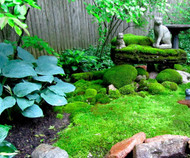
Step-by-Step Guide to Growing Moss Naturally
Posted by Tammy Sons on Mar 11th 2026
The first step in converting the shaded areas of outdoors to soft and green landscapes is learning growing moss techniques that produce beautiful, low-maintenance groundcovers. Knowing how to grow moss enables homeowners to have natural carpets that grow in damp conditions and need practically no maintenance. Moss gardens are also an effective way to enhance the landscapes that have the appearance of woodlands by making the soil more stable, keeping the moisture in, and making the landscape look more natural. At Tree Nursery Co., we deal with the best sorts of moss, such as Reindeer moss, Thuidium moss, Hedwigia Ciliate moss, Haircap moss, and Broom Fork moss, to be used in natural garden work.
Understanding Why Moss Thrives in Natural Landscapes
Growing moss is successful in the natural landscapes since these ancient plants are adapted to survive in the environment where traditional grass used in the lawns does not do well. The knowledge of moss cultivation will show that such non-flowering plants are shade-loving, water-retaining, and slightly acidic in soil. The moss in yard settings is ideal in problematic places where grass fails to thrive.
The shade gardens have visual interest through the different colors of moss, including green, blue, golden, and so on. For more information, you can visit the article on moss that gives useful educational resources on the topic of moss biology.
Choosing the Best Moss Varieties for Your Garden
To select the most suitable moss species to use in your moss garden, you need to know the specific needs of various species. The beginning of how to grow moss successfully is to ensure that the varieties match the site conditions available.
Tree Nursery Co. produces exceptional varieties adapted to various types of moss for landscaping applications:
Reindeer Moss
This is a unique lichen that is branched and coral-like and provides the moss with a peculiar texture. The Reindeer Moss is one of the most decorative options for moss garden decorating purposes.
Thuidium Moss
Feathery moss, which is fern-like and soft-textured, forming carpets. Thuidium Moss is an ideal moss for landscaping in woodland gardens.
Hedwigia Ciliate Moss
The ciliate moss is a tough moss that grows on rocks and dry, exposed areas where other mosses do not. The Hedwigia Ciliate Moss proves the potential of moss to grow in adverse environments.
Haircap Moss
This is a unique moss that is upright and provides decoration with a vertical effect in the moss garden. The Haircap Moss provides a special texture for cultivating moss in a three-dimensional landscape.
Broom Forkmoss
This is a thick, low mat of moss that will remain green throughout the year. The Broom Forkmoss is one of the most resistant options of moss in yard settings in the high-traffic areas.
Preparing the Right Environment for Moss Growth
To prepare a proper environment for growing moss, one should create the conditions that would simulate natural forest floors. The way to grow moss effectively refers to the supply of shade, constant moisture, and slightly acidic soil with a pH of 5.0-6.0.
Optimal conditions include:
- Shade to partial shade: Hot afternoon sun protection.
- Regular dampness: Mist frequently in the initial stages.
- Soil surface compactness: A firm surface that is in contact with moss.
- Limited to slight acidity: pH inclination towards moss and not the competing plants.
To set up the moss in yard settings, one has to prepare the area by removing the competing plants and providing texture to the moss so that the moss can adhere to it.
Simple Techniques for Planting Moss Successfully
Moss garden establishment involves planting moss that is quite easy yet definite. Moss grows optimally when pieces of moss are compressed against smooth surfaces. Knowledge of growing moss requires awareness that these plants do not need roots to absorb water but instead use leaves.
It has the following practical steps:
- Prepare the ground: Remove weeds and rake slightly for moss in the landscaping grounds.
- Plant moss segments: Place as hard as possible against the soil so that the moss can grow.
- Keep moist: Spray every day during the first 2-3 weeks when learning how to grow moss.
The moss can develop at a different rate, and hence, one should be patient to have different colors of moss. The moss used in yard installations needs regular moisture in the first few weeks.
Caring for Moss Gardens to Maintain Healthy Growth
Moss garden planting is one of the simplest to take care of as long as it grows well. When established, most varieties require little misting when there is a long drought. Knowing how to grow moss in the long term implies knowing that the plants survive on non-malicious neglect.
Sweep surfaces of fallen leaves and debris, which shield light. Long-term successful growth of moss requires the preservation of shade and moisture conditions under which the initial establishment was possible.
Moss for landscaping designs involves mixing varieties of moss with textures and colors that are opposite to each other. Thuidium Moss and Broom Forkmoss should be used to create delicate texture, thick coverage, and sculptural accents, respectively. Tree Nursery Co. comes with instructions on how to install the same, and the details are given with each order.
Conclusion
Knowing how to cultivate moss enables the homeowners to be able to design tranquil and low-maintenance gardens that are abundant with the beauty of nature. Growing moss also provides green alternatives to traditional lawns in difficult shaded areas by moss for landscaping applications, which would produce no mowing and few watering requirements. Deciding on the decorative Reindeer Moss, the lightweight Thuidium Moss, the rugged Hedwigia Ciliate Moss, the haircap Moss, or the sturdy Broom Forkmoss, each variety of Tree Nursery Co. is chosen on quality. Trust Tree Nursery Co. as your source of creating prosperous moss in yard landscapes.
FAQs
What conditions are best for growing moss naturally?
In learning the process of growing moss to achieve success in a moss garden, it needs shade, constant moisture, and slightly acidic soil.
Does moss require watering regularly?
Moss needs to be misted every day at the start of the planting process and then watered infrequently when the roots of the moss grow effectively.
Is moss a good ground cover for shaded areas?
The moss garden designs are indeed a good ground cover in the shady corner of the yard, where grass does not grow, and with little care they thrive.
Where can I buy outdoor moss plants online?
Tree Nursery Co. offers high-quality varieties of moss to grow, such as the different mosses, which can be used in landscaping, with quality instructions on how to grow moss.
How to grow moss naturally?
To cultivate moss, prepare the surface of shaded areas, lay moss flat on the soil, and sprinkle daily to establish the moss.
How do you start growing moss?
Choose shade spots, extract the vegetation, fix moss pieces, and keep moisture when cultivating moss in the creation of moss gardens.
Can I grow moss instead of grass?
Yes, moss in landscape use is great, since moss is low-maintenance and works as a grass alternative.
What is the easiest moss to grow?
Broom Forkmoss and Thuidium Moss are among the easiest to grow varieties of moss.