Step-by-Step Guide to Planting Live Stakes for Erosion Control
Posted by Tammy Sons on Apr 15th 2026
If you’ve ever watched part of a streambank give way after a big rain, or noticed soil slowly disappearing from a bare slope, you know how frustrating—and damaging—erosion can be. It doesn’t take long for things to go from stable to slipping away. That’s why live staking is such a go-to solution. It’s simple, budget-friendly, and has been used for years by people who work closely with the land. Instead of trying to fight nature, it leans into it. You take cuttings from hardy, woody plants and place them right into the soil, where they begin to root and grow. Over time, those cuttings turn into living support systems. They hold the soil together, slow down water as it moves across the land, and gradually bring the area back to life with new plant growth. It’s a quiet, natural fix—but a really effective one.
What Are Live Stakes and How Do They Prevent Erosion?
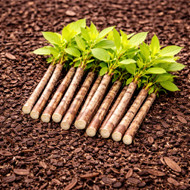
Live stakes are dormant cuttings taken from woody shrubs or trees — typically 1–4 feet long and pencil-thick to thumb-thick in diameter — that are driven directly into moist soil where they root and establish as living plants. Unlike dead wooden stakes, these cuttings contain viable cambium tissue that, under the right conditions, sprouts roots within weeks of installation.
The mechanics of erosion prevention start underground. As live stakes develop root systems, those roots bind soil particles together, increase infiltration of rainfall, and physically anchor the bank or slope against the forces of moving water. Aboveground, the stems and leaves that emerge slow surface runoff velocity, reducing the energy that water carries as it moves across the landscape.
Live willow stakes (Salix spp.) are the classic choice for this work — willow is almost legendary for its ability to root from a cutting in wet soil. But they're far from the only option. Buttonbush, dogwood, river birch, and hydrangea all perform well as native plants for erosion control in different site conditions.
Key scenarios where live staking excels:
- Streambanks and riparian buffers prone to undercutting
- Road cut slopes and disturbed embankments
- Wet swales, drainage ditches, and pond margins
- Any area where establishing conventional plantings is difficult due to soil instability
Tree Nursery Co. has supplied live stakes to restoration projects, municipalities, and private landowners for years, with an inventory built specifically around species proven to root reliably and survive the challenging conditions typical of erosion-prone sites.
Best Plant Species for Live Staking Projects
Choosing the right species is the single most important decision in a live staking project. The plant needs to match the site's hydrology, soil type, and sun exposure — get that right and establishment is almost inevitable; get it wrong and even healthy cuttings will fail.
Black Willow (Salix nigra)
Black Willow is the gold standard for riparian live staking. It roots aggressively in saturated soils, tolerates seasonal flooding, and establishes faster than almost any other native woody species. In its natural habitat, it grows along floodplains, creek banks, and river margins throughout the eastern United States — exactly the environments most vulnerable to erosion.
Black Willow Stakes from Tree Nursery Co. are cut at peak dormancy for maximum rooting success. When driven into consistently moist soil, Black Willow stakes can show visible bud break within two to three weeks and begin rooting shortly after. Within a single growing season, a well-placed stake can develop a root system several feet in diameter.
Button Bush (Cephalanthus occidentalis)
Button Bush is a native shrub found naturally in wetlands, pond margins, and stream edges from Zone 4 through Zone 9. Its dense, fibrous root structure makes it one of the best plants for erosion control in seasonally flooded or permanently wet areas. It also produces distinctive spherical white flowers that are magnets for pollinators — an ecological bonus on any restoration site.
Button Bush Live Stakes are particularly effective where you need both erosion stabilization and wildlife habitat value. Waterfowl and songbirds use Button Bush heavily for nesting and cover.
River Birch (Betula nigra)
River Birch is one of the most adaptable native trees for wet, acidic soils. It grows naturally along floodplain edges and stream corridors throughout the Eastern and Central U.S., making it a natural fit for native plants for erosion control in those regions. Its root system is shallow and wide-spreading, excellent for binding surface soils on gentle slopes and streambanks.
River Birch Live Stakes establish well in full sun to partial shade and are a good choice for sites where you want eventual canopy development alongside erosion control.
Roughleaf Dogwood (Cornus drummondii)
Roughleaf Dogwood is a suckering shrub native to moist woodlands and stream edges across the Midwest and South. It forms dense thickets over time, which is exactly what you want on an unstable bank — that interconnected root mass becomes a literal net holding the soil together. Its white spring flowers attract pollinators, and its fall berries are an important food source for migrating birds.
Roughleaf Dogwood Live Stakes are especially useful for tree staking techniques on sites where you want multi-stem shrub cover rather than a single-trunk tree form.
Hydrangea (Hydrangea arborescens)
For partially shaded slopes with decent moisture, native Hydrangea is a surprisingly capable erosion control plant. Its fibrous roots hold soil effectively on moderate slopes, and it establishes readily from live stakes where soil organic matter is present.
Hydrangea Live Stakes from Tree Nursery Co. bring the added benefit of visual appeal — this is one of the few live staking species that also works beautifully in a home landscape setting, not just on utilitarian restoration sites.
Benefits of Using Live Stakes for Erosion Control
Live staking has a lot of benefits that passive engineering methods just can't match, in addition to avoiding soil loss.
- Ecological restoration: Live staking is one of those things where you don’t see everything happen at once, but give it a little time and the place starts changing. The cuttings grow into native plants, bugs come back, birds start using the area again, and the soil slowly gets better just from leaves and plant growth.
- Cost efficiency: It’s also a very practical choice if budget matters. Compared to hauling in plants or using heavy construction solutions, this approach is much easier on the wallet. And when you’re dealing with a bigger site, that difference isn’t small — it really adds up.
- Speed of establishment: What surprises most people is how quickly it starts working. Willows especially don’t hang around — they root fast and start leafing out in a matter of weeks if conditions are decent. That kind of quick response can make all the difference before the next rain hits.
- Self-sustaining results: Another big plus is that it doesn’t feel temporary. You’re not putting something down that’s going to wear out and need replacing. Instead, the plants keep growing, roots spread deeper, and the whole area slowly becomes more stable on its own.
- Better soil health: Give it a little time and the soil just starts feeling different. It’s not as hard, not as dry — it kind of loosens up on its own. The roots spread out underneath, and the old leaves just settle back into the ground. Nothing fancy, it just slowly gets better and holds together the way it should.
When sourcing materials, quality matters. Tree Nursery Co. harvests cuttings during true dormancy, when carbohydrate reserves in the stem are at their peak — this is what gives a well-sourced stake its strong rooting potential compared to material cut at the wrong time of year.
Step-by-Step Process to Plant Live Stakes Effectively
Whether you're stabilizing a backyard drainage swale or a quarter-mile of streambank, the installation process for live staking follows the same fundamental steps. Good tree staking techniques come down to timing, preparation, and correct installation.
Step 1: Timing Your Installation
Plant live stakes during dormancy — late fall through early spring, before bud break. Dormant cuttings have suppressed metabolic activity and tolerate the stress of installation far better than actively growing material. In most of the country, November through March is the ideal window. Avoid planting during hard freezes when soil is impossible to work.
Step 2: Prepare the Site
Take away any plants that are growing in the same area as the stakes, especially invasive grasses that will outgrow the young stakes. If the dirt is very hard, use a digging bar to break it up before you put it in. For sites with very poor organic matter, working a light layer of compost into the top few inches improves early root establishment by supporting soil microbial diversity.
Step 3: Install the Stakes Correctly
This is where most beginner mistakes happen. Follow these guidelines:
- Drive stakes deep: Plow your stakes down so that at least 60% to 70% of their length is below ground. That's about 20 to 24 inches below the ground for a 3-foot stake, which is deep enough to reach dirt that is always wet.
- Use a digging bar or rebar pilot hole: Never hammer stakes directly without a pilot hole, as this crushes the cambium tissue at the base and kills rooting potential.
- Orient correctly: Most species have a defined top and bottom — buds point upward. Installing upside-down is a common and fatal error.
- Spacing: For bank stabilization, 1–2 foot spacing in a staggered grid pattern provides good coverage. For wildlife habitat objectives, slightly wider spacing allows each plant room to develop its natural form.
- Firm the soil: After driving the stake, firm the soil around it by hand to eliminate air pockets, which dry out the base and inhibit rooting.
Step 4: Water and Monitor
If it doesn't rain in the first day or two after installation, water soaks in deeply. For the first four to six weeks, the goal is for the soil to stay wet, but not soaked. Regularly check for signs of bud swell and leaf emerging, which show that rooting is happening. The USDA Natural Resources Conservation Service says that the two things that are most strongly linked to live stake survival rates are the right time to place them and the amount of water on the site.
Conclusion
Live staking is a technique that rewards patience and precision. Done right, it transforms an unstable, erosion-prone site into a thriving plant community that improves with each passing year — at a fraction of the cost of hard engineering. The key is selecting the right species for your site, sourcing dormant material from a knowledgeable supplier, and installing with care.
At Tree Nursery Co., you can trust to get good live stakes like Black Willow Stakes, Button Bush Live Stakes, Hydrangea Live Stakes, River Birch Live Stakes, and Roughleaf Dogwood Live Stakes. They pick all of their roots when they are fully dormant and ready to root.
FAQ's
How do you plant live willow stakes?
Drive at least 60–70% of the stake's length into moist soil using a pilot hole, with buds oriented upward, and firm the soil around it to eliminate air gaps.
What are live stakes?
Live stakes are dormant cuttings from woody shrubs or trees that root directly in the ground when installed, establishing as living plants that stabilize soil.
Which plants are best for live staking projects?
Some of the more reliable plants are Black Willow, Button Bush, River Birch, Roughleaf Dogwood, and Hydrangea. Each one does well in a given amount of wetness and in various conditions.
Do live stakes require maintenance after planting?
You don't have to do much to keep it up. For the first few weeks, make sure the soil stays wet, and get rid of any heavy weeds that might be competing with young plants.
When is the best time to plant live stakes?
Late fall through early spring during full dormancy, before bud break — typically November through March depending on your region.
Where can I buy live stakes for erosion control online?
Tree Nursery Co. offers a full range of live stakes for sale, harvested at peak dormancy and shipped ready for installation at treenurseryco.com.