Best Types of Moss for Landscaping in Zones 4–8
Posted by Tammy Sons on Apr 15th 2026
If you have ever struggled to grow anything under a dense tree canopy or along a shaded, damp slope, you already know the frustration. Grass thins out, flowers refuse to bloom, and bare soil just sits there looking untidy. That is exactly where landscaping moss steps in — and honestly, once you start working with it, you wonder why you did not try it sooner.
Moss is quiet, unpretentious, and remarkably good at thriving in the spots most plants ignore. For gardeners across USDA Zones 4 through 8, it is one of the most practical and naturally beautiful ground cover options available. No fertilizer, no mowing, no fuss. Just a soft, living carpet that gets better with time.
At Tree Nursery Co., we have grown and supplied native plants for decades, and moss remains one of the most rewarding categories we work with. This guide walks you through the best varieties for your zone, how to get them established, and how to choose the right one for your space.
Why Moss Is an Ideal Landscaping Choice for Zones 4–8
Most people come to moss out of necessity — nothing else will grow in that shady corner — and then quickly realize it is genuinely one of the better landscaping decisions they have made. Zones 4 through 8 cover everything from harsh Upper Midwest winters to the mild, humid conditions of the mid-Atlantic, and moss handles this entire range surprisingly well.
What makes it such a good fit is how little it demands. It pulls moisture from rain and humid air, keeps the soil beneath it cool and consistently damp, and builds up organic matter naturally over time. It supports healthy soil organisms and microbial diversity without a single chemical input. And once it is established, it largely takes care of itself.
- Needs no mowing, fertilizing, or edging
- Retains moisture and reduces how often you need to water surrounding plants
- Holds soil on slopes, preventing erosion after heavy rain
- Thrives in shade where grass simply will not grow
- Supports root health by keeping the ground cool and moist
Planting with moss is also a genuinely creative process. With so many different types of moss available, you can build everything from a seamless green carpet to a layered, textured woodland floor that looks like it has been there for years.
Top Moss Varieties for Zones 4–8
Understanding the kinds of moss plants available — and what each one needs — is what separates a moss garden that struggles from one that genuinely thrives. Here are five excellent options from Tree Nursery Co.:
1. Reindeer Moss
Reindeer Moss has a pale silver-green color and a delicate branching structure that looks unlike anything else in a garden. Technically a lichen, it is one of the toughest options in the landscaping moss category — handling dry spells, poor soils, and rocky surfaces with ease. It works beautifully in rock gardens or around the base of trees in Zones 4–8.
2. Thuidium Moss
If you want that classic, lush woodland carpet look, Thuidium Moss (Thuidium delicatulum) is hard to beat. Its feathery, fern-like fronds form a dense, even mat over moist soil, logs, and shaded ground. It is one of the most visually rich types of moss for shaded pathways and naturalistic garden designs in Zones 5–8.
3. Hedwigia Ciliate Moss
Hedwigia Ciliate Moss grows naturally on exposed rock faces and dry stone walls, which tells you a lot about its character. When conditions dry out, it goes dormant rather than dying — and bounces back once moisture returns. It is one of the most forgiving kinds of moss plants for beginners and a smart pick for hardscape integration.
4. Haircap Moss
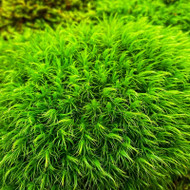
Haircap Moss (Polytrichum commune) grows upright in dense, bristle-like shoots that create a surface genuinely similar to fine grass. It is one of the best options for planting with moss as a full lawn alternative in shaded, acidic areas. It also improves organic matter over time and supports the kind of microbial diversity that keeps surrounding plants healthy.
5. Broom Forkmoss
Broom Forkmoss (Dicranum scoparium) has a flowing, wind-swept look that adds real movement and texture to a garden. It forms soft, sweeping mounds and works especially well around tree roots, along water features, and between stepping stones. For anyone building a layered moss garden design, this one is a natural fit across Zones 4–8.
Step-by-Step Guide to Planting Moss Successfully
Here is the good news: learning how to grow moss is genuinely straightforward. It does not need the same preparation as most plants.
- Step 1 — Prepare your site. Clear away weeds, thick mulch, and debris. Test your soil pH and aim for between 5.0 and 6.5 — slightly acidic is ideal. If your pH is too high, a small amount of sulfur worked into the surface will bring it down. You do not need to till deeply; moss anchors to the surface, not deep into the ground.
- Step 2 — Plant and press. Lay your moss flat on the prepared surface and press it down firmly with your hands or a flat board. For clump-forming varieties like Haircap Moss, space clumps about 3–6 inches apart and let them fill in naturally. Mist the area after planting — a gentle spray works better than heavy watering at this stage.
- Step 3 — Keep it moist early on. For the first four to six weeks, consistent moisture is the main thing that determines whether your moss establishes well. After that, most varieties become largely self-sufficient. The Missouri Botanical Garden has solid resources on regional moss establishment if you want more detailed information specific to your climate.
How to Choose the Right Moss for Your Landscape
With so many different types of moss out there, the simplest way to choose is to match the plant to your actual conditions rather than the other way around.
- Deep shade under dense trees — Thuidium Moss and Broom Forkmoss are your best options.
- Partial or dappled shade — Haircap Moss and Reindeer Moss both handle this well.
- Dry, rocky, or exposed areas — Hedwigia Ciliate Moss is built for this.
- Replacing a lawn — Haircap Moss gives the closest result to a traditional turf surface.
Mixing a few kinds of moss plants together is also worth considering. Combining varieties with different heights and textures creates a naturalistic, layered ground cover that genuinely looks as if it grew there on its own.
Conclusion
Moss is one of those plants that earns your appreciation quietly. It does not demand attention, it does not need much from you, and it turns the spots most gardeners have given up on into something genuinely worth looking at.
Whether you are working in Zone 4 or Zone 8, there is a moss variety that fits your conditions. Tree Nursery Co. offers Reindeer Moss, Thuidium Moss, Hedwigia Ciliate Moss, Haircap Moss, and Broom Forkmoss — all grown with care and ready to get established in your garden. Start your planting with the moss journey at Tree Nursery Co. today.
FAQs
What type of moss is best for landscaping?
It depends on your site. Thuidium and Haircap Moss suit moist, shaded areas well. Hedwigia Ciliate and Reindeer Moss handle drier, rockier conditions. All five varieties from Tree Nursery Co. cover the full range of Zones 4–8.
What is the easiest moss to maintain?
Reindeer Moss and Hedwigia Ciliate Moss are the most low-maintenance because they tolerate dry periods without damage. All moss is easier than grass once it has settled in.
Does moss spread easily?
Moss spreads gradually rather than overnight — it moves through spores and slowly expands outward on its own. Thuidium and Haircap Moss tend to fill in a bit faster when the conditions are consistently moist. If you want quicker coverage from the start, dividing your clumps and pressing them across a wider area at planting time makes a noticeable difference.
Which moss types grow best in shade?
Thuidium Moss, Broom Forkmoss, and Haircap Moss all perform well in shade. Thuidium is particularly effective in deep shade under dense canopies.
Can moss be used as a lawn alternative?
Absolutely. Haircap Moss is the closest thing to a traditional lawn surface — dense, lush, and completely maintenance-free once established. It is a genuinely great option for shaded areas where grass keeps failing.